Car Ceramic Coating: Real Protection or Marketing?
Everyone has seen the videos where water rolls off the hood. Here's an honest look at what ceramic coating actually does, what it won't protect against, and when it's worth paying for.
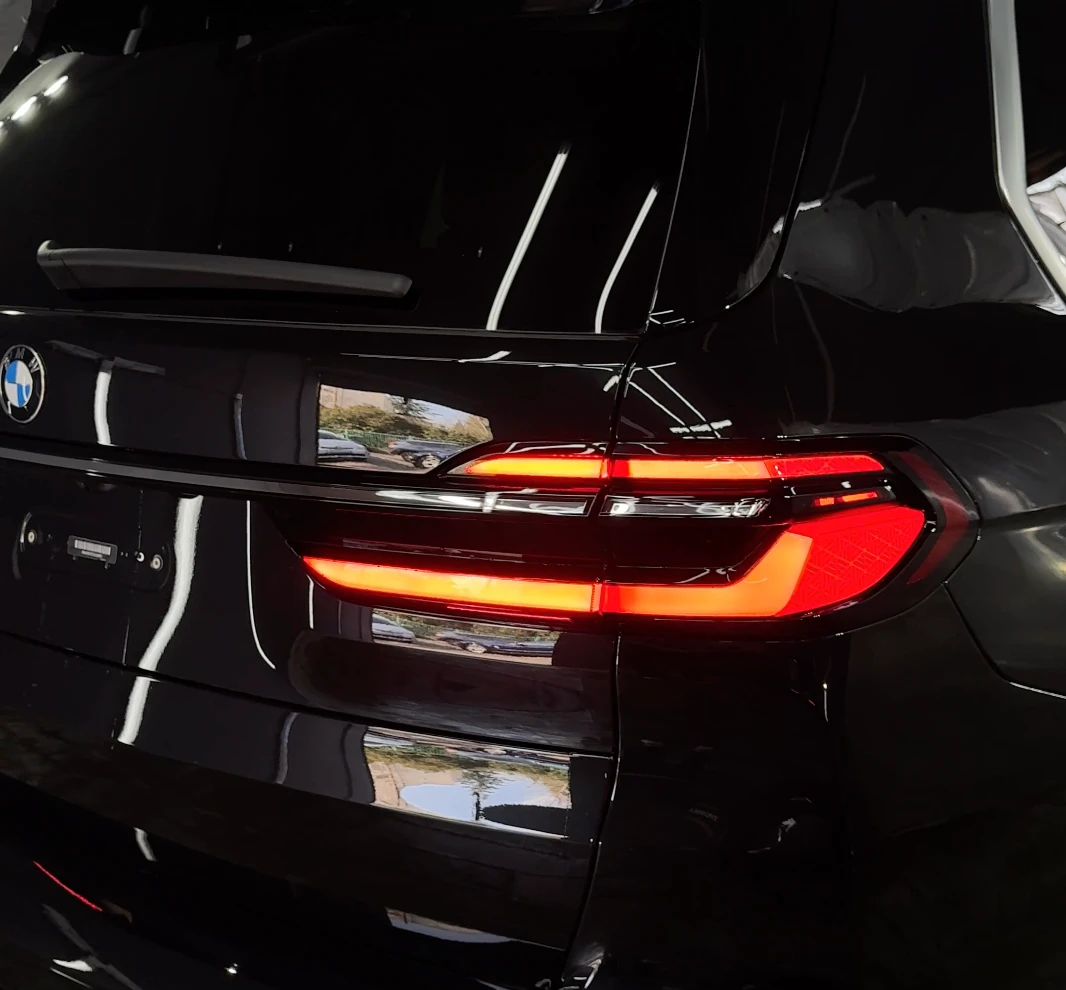
Everyone talks about ceramic coating now: videos show water poured on a hood and rolling right off, like from a Teflon pan. That leads to two extreme opinions: “it’s armor for your car” and “it’s marketing to take your money.” The truth is somewhere in the middle.
What ceramic coating is
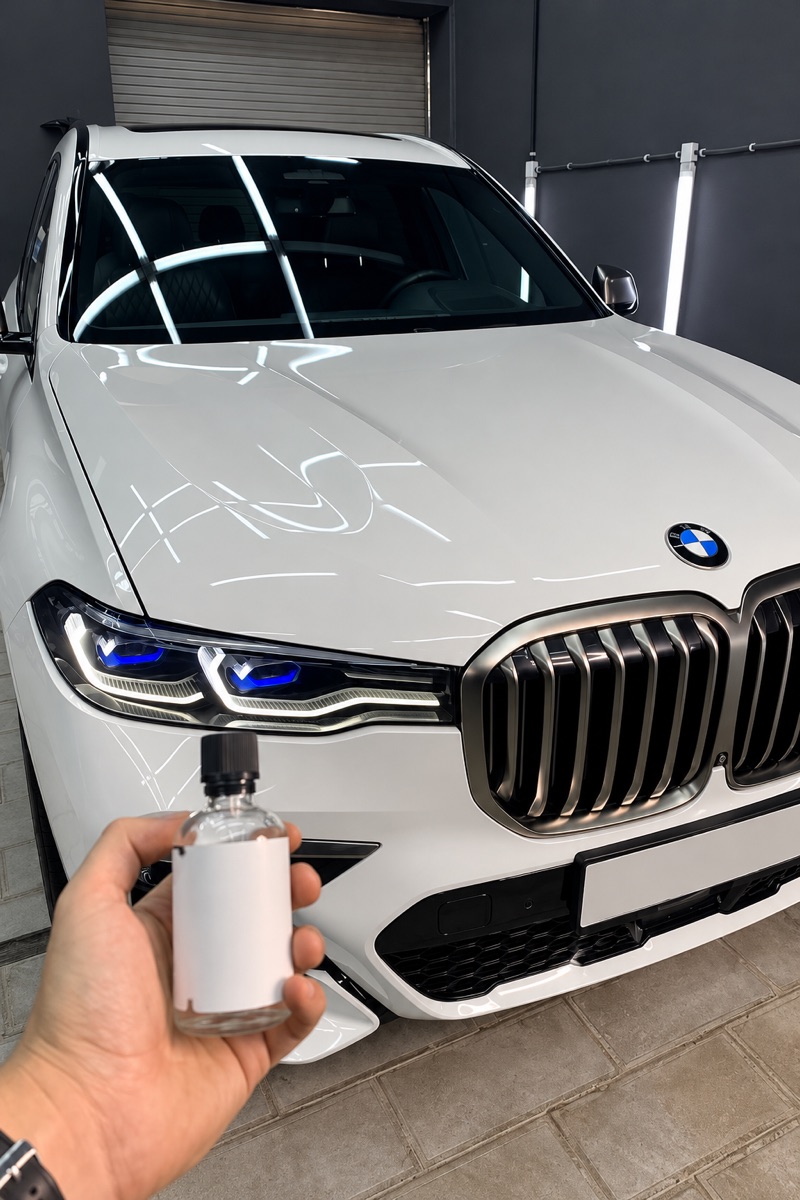
It’s a liquid compound based on silicon dioxide. It’s applied to the paint, and within a few days it hardens into a thin, clear layer. This layer is harder and smoother than the paint itself. Dirt and water stick to it less. Such coatings are also called nano ceramic, and are sometimes confused with “liquid glass”: the formulas are similar, as both are silicon-based.
An important detail: ceramic coating doesn’t hide defects, it locks in what’s on the paint. If you apply it to a body with a “spider web” of swirl marks, the marks stay under the coating for as long as it lasts.
What ceramic coating really gives you
- The car stays clean longer. Dirt and dust cling less to a smooth surface.
- Easier washing. Much of the dirt rinses off with water, without friction.
- Deep gloss without wax. You don’t need to refresh the shine every couple of weeks.
- No water spots. After rain, drops roll off instead of drying into stains.
- Less paint fading. The coating takes the sun and chemical hits instead of the paint.
What ceramic coating doesn’t protect against
This is where the marketing starts, and it’s not worth believing:
- Stone chips. The layer is too thin. Only polyurethane film protects against stones;
- Deep scratches. From a key, a branch, or someone else’s door in a parking lot;
- Brush washes. The coating wears more slowly, but it still wears away;
- Eternal shine. Even the best ceramic coating wears out over time.
How long ceramic coating lasts
We apply coatings for 1, 3 and 5 years. The lifespan depends on the chosen product, but not only on it. These shorten it:
- automatic washes with brushes;
- alkaline chemicals at touchless washes;
- a car that stands in the sun all day.
We’ve put together how to wash the car so the coating lasts its full term in the article on car care after detailing.
Why ceramic coating is applied after polishing
The coating only bonds well to perfectly clean paint, free of oil, wax residue and micro-scratches. That’s why the body is polished before application: holograms, swirl marks and oxidation are removed, and then the surface is degreased.
Without polishing, you’re paying to preserve the defects. One client wrote after polishing with ceramic coating that he didn’t recognise his own car. That’s why at Detailing Standart polishing with ceramic coating is sold as a package with a 20% discount.
How ceramic coating is applied
The application itself takes the least time. Almost all the work goes into preparation.
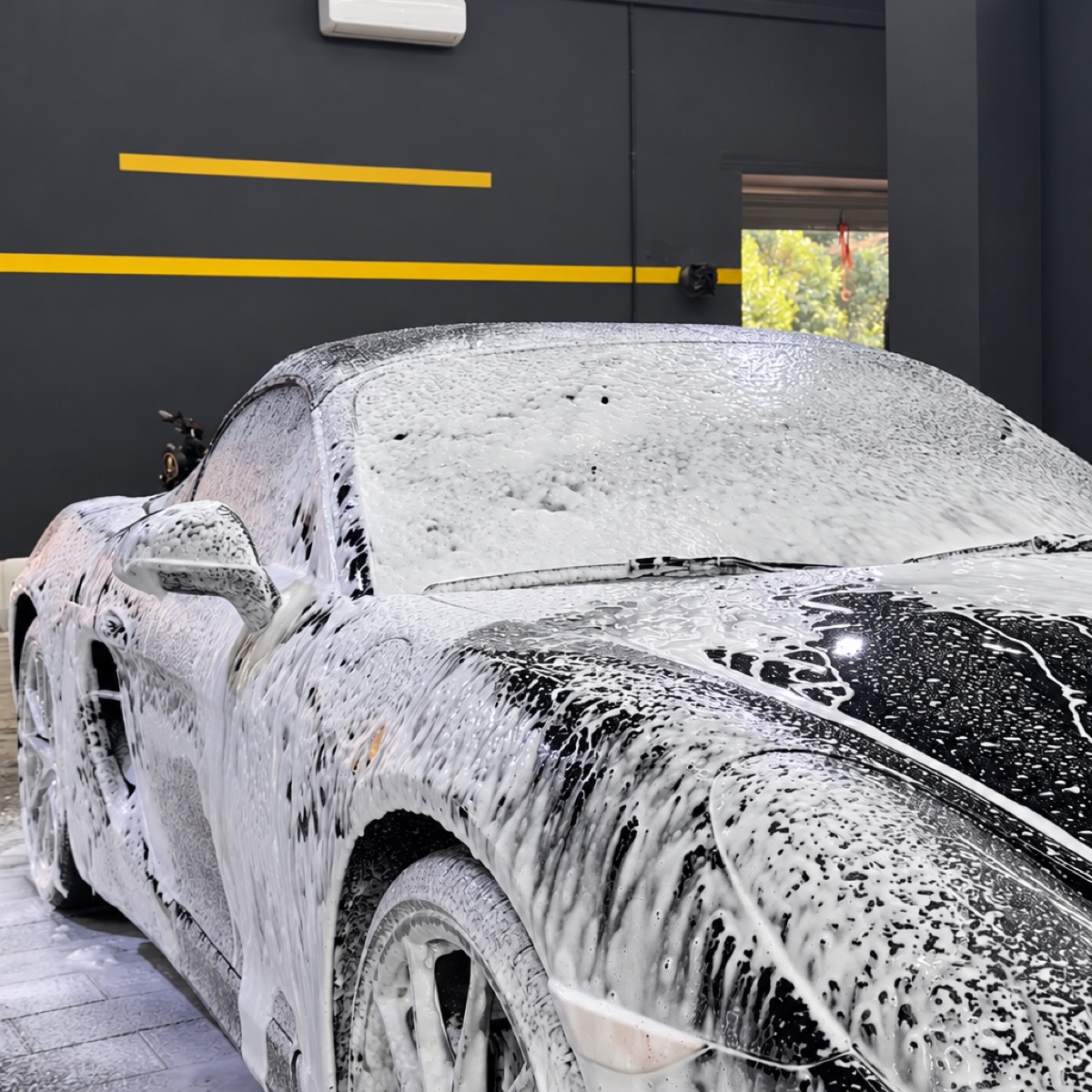
- Washing. Touchless and hand wash, with wheels and hard-to-reach areas done separately.
- Clay decontamination. Clay with lubricant removes what shampoo doesn’t wash off: tar, metal particles, paint overspray.
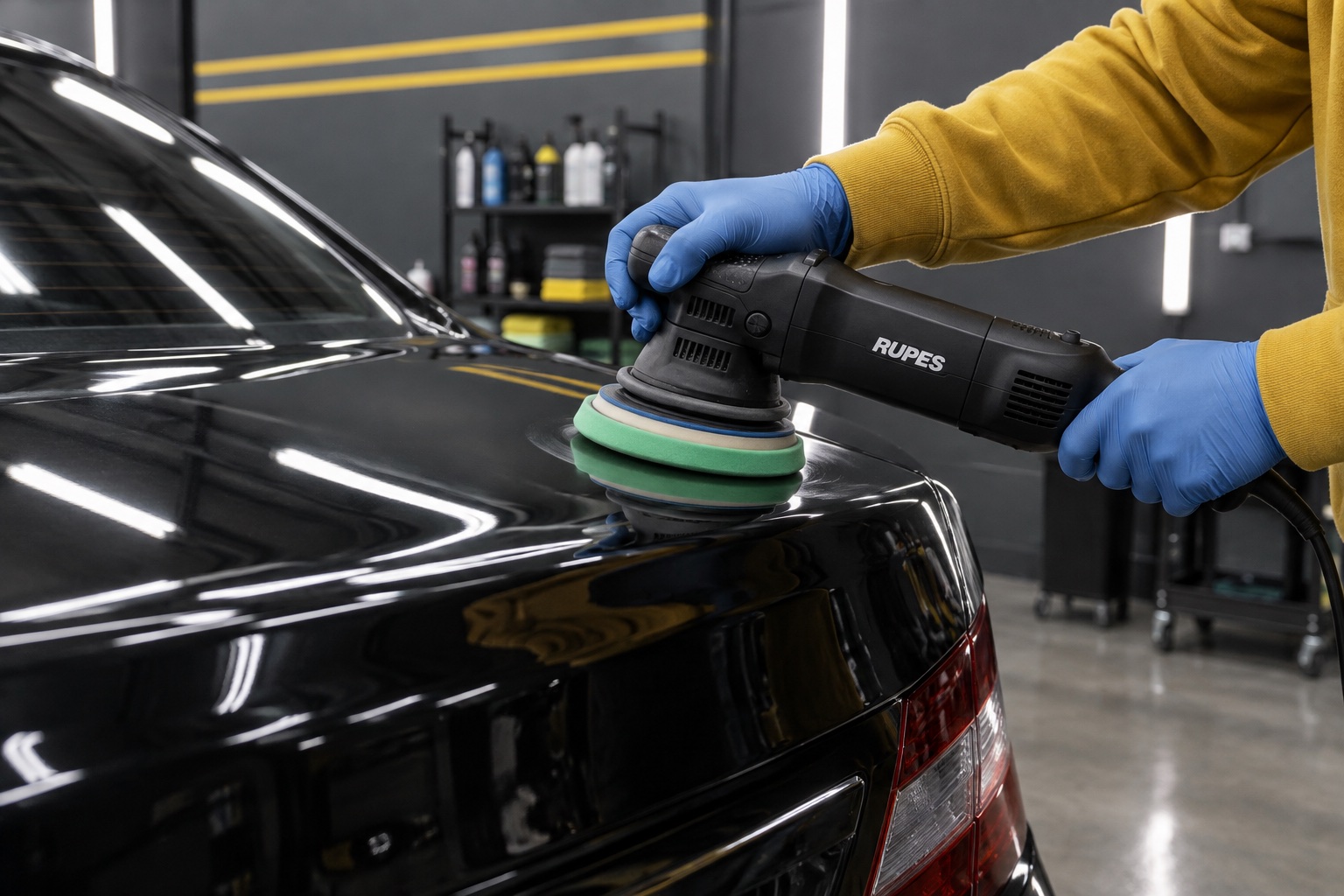
- Polishing. We remove holograms, swirl marks and oxidation. Without this step, the coating locks in the defects.
- Degreasing. No oil from polishing compounds or traces of wax can remain on the paint, otherwise the coating won’t bond to the surface.
- Application. The coating is applied panel by panel and levelled before it sets.
After that, the coating needs time to harden. The technician will explain how to handle the car in the first few days at handover.
We use the same materials as for polishing: Koch Chemie, Rupes and SOFT99.
Ceramic coating on a new car: is polishing needed?
Many people are sure a new car doesn’t need polishing, since the paint is factory-fresh. But before the owner gets it, the car goes through transport, parking and washing at the dealership. On dark paint, the marks from these washes are often visible within the first month.
That’s why during the inspection, the technician checks the paint under proper lighting. If there are no defects, the coating is applied after washing and cleaning. If there are, a light polish comes first. This is more honest than covering scratches with a coating for years to come.
Ceramic coating or paint protection film
They’re often confused, though they serve different purposes.
Film is thick, clear polyurethane. It takes the impact of stones, so it’s applied to the hood, bumper and mirrors. But film is expensive, and covering the whole car with it is rare.
Ceramic coating is thin. It doesn’t protect against chips, but it gives gloss, makes washing easier and protects the paint from the sun across the whole body.
The two don’t conflict: ceramic coating can be applied over film.
How much ceramic coating costs in Tbilisi
Mini 600 ₾, sedan 700 ₾, SUV 900 ₾. Combined with polishing, ceramic coating is 20% cheaper. Details are on the ceramic body coating in Tbilisi page, and you can calculate the cost for your car in the calculator.
Is it worth paying for?
It is, if you’ve just had polishing and want the shine to last. Or if the car is new and the paint is still in good condition. Or if you’re tired of washing the car every week.
It isn’t, if you’re going to sell the car soon (polishing alone is enough) or you wash it twice a year at a brush wash. The coating will simply wear away.
Torn between ceramic coating and wax? We compared them in the article wax or ceramic: which to choose.