When to Polish Car Paint: 6 Signs
Paint loses its shine gradually, so the right moment for polishing is easy to miss. Here's what to look for to tell that your car needs it, and how often it can be done.
A car doesn’t become dull in a day. Every wash, every wipe with a cloth, every summer under the sun takes away a little of the shine. The owner sees the car every day and only notices the difference in photos from when it was new. Here are six signs that it’s time.
1. A “spider web” in the sun
Take the car into the sun or shine your phone’s flashlight on the hood. If you can see thin circles around reflections, like a web, these are micro-scratches from washes. We covered where they come from in the article how to wash a car correctly. They’re visible right away on dark cars, less so on light ones, but they’re there.
2. Holograms
Rainbow streaks and swirls that move as you walk around the car. These are usually traces of poor polishing: a coarse compound was used and the final pass was skipped.
3. Hazy paint, faded colour
A red car has turned pinkish, a black one grey. This is oxidation: the top layer of the paint has been burned by the sun. It’s especially noticeable on the hood, roof and trunk, which get the most sun.
4. Water doesn’t roll off
On smooth paint water beads up. On old paint it spreads into patches and leaves marks after drying. This means the surface has become rough and there’s no protection left on it.
5. Cloudy headlights
Plastic headlights turn yellow and cloudy from sun and sand. The car looks older, and the light at night is weaker. We polish the headlights together with the body as part of the job: a polished body with cloudy headlights would look strange.
6. Before selling
A polished car in the listing photos looks more expensive, and it’s easier for a buyer to believe it was well cared for. Before selling, polishing is often combined with interior cleaning, which makes it 20% cheaper.
What restoration polishing removes and what it doesn’t
Removed:
- the “spider web” and wash marks;
- holograms;
- oxidation and haze;
- fine scratches. 99% of scratches are removed.
Not removed: scratches down to the primer or metal. For these we offer local repair: after it, the damage is invisible.
The technician will tell you honestly during the inspection what will and won’t come out. Under the right light, you can see repaints, thin paint and the depth of every scratch.
How often you can polish
Restoration polishing removes a thin layer of paint. That’s why it can’t be done every six months. How many times your particular car can take it depends on the thickness of the paint, which the technician assesses during the inspection. Usually the factory paint is enough for several polishes.
To polish less often, apply ceramic coating after the polish and wash the car properly. Without protection, the shine lasts only until the paint is scratched again, most often by car wash brushes.
How polishing works at Detailing Standart
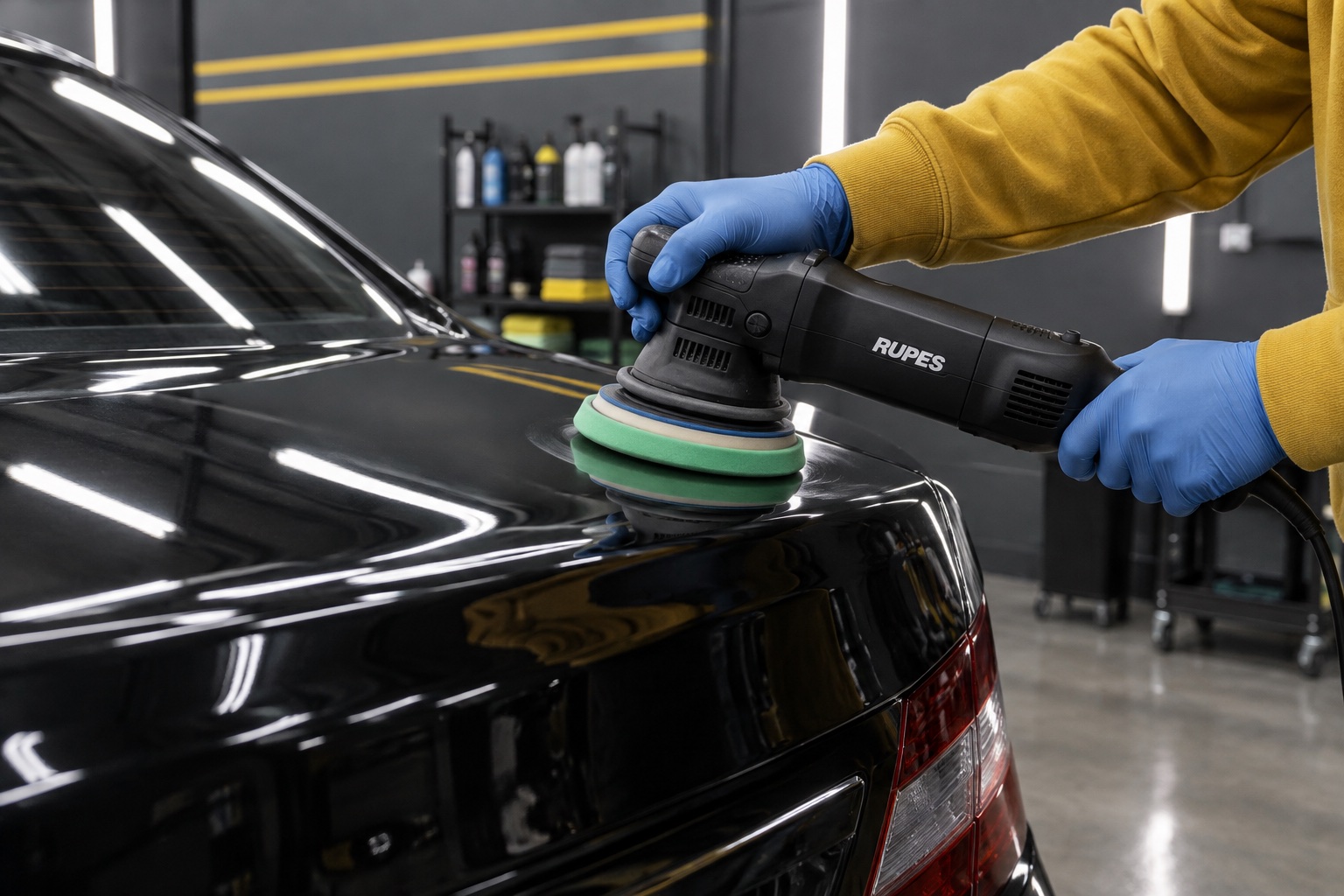
17 stages using Koch Chemie and Rupes materials. In brief:
- Preparation. Touchless and hand wash, clay decontamination, drying and blowing out.
- Diagnostics. Paint inspection, protecting plastic and rubber, a test spot to choose the compound and pad.
- Polishing. Correction passes, an intermediate check, a final anti-hologram polish and quality control.
Guarantee: we remove scratches physically, we don’t mask them. Nobody can make the shine any better, or we refund you.
Price
Mini 500 ₾, sedan 700 ₾, SUV 1,100 ₾. A 20% discount applies when combined with ceramic coating or interior cleaning. Details and booking are on the car body polishing in Tbilisi page, and you can calculate the cost for your car in the calculator.